47°N

Sunset Limited · 1,995 miles · 46 hours

Los Angeles → New Orleans

America's oldest named train, tracing the southern border from Pacific palms to Gulf Coast jazz.

Begin
1,995 mi·46 hours·5 chapters·Rail

This train traces America's southern edge — from the Art Deco grandeur of Los Angeles Union Station through Sonoran saguaro forests, along the Mexican border at El Paso, across the sprawling Texas heartland, and into the moss-draped bayous of Louisiana. Founded in 1894, the Sunset Limited is the oldest named train in the United States. It runs only three departures per week, which strips away any pretense of commuter efficiency and gives the journey the weight of an expedition. By the time the train pulls into New Orleans Union Passenger Terminal on the third evening, you will have crossed deserts, mountain ranges, river deltas, and an entire cultural continent.

01
Los Angeles Union Station interior glowing under Art Deco pendant lamps at night

Union Station · Mile 0

Departure from Los Angeles

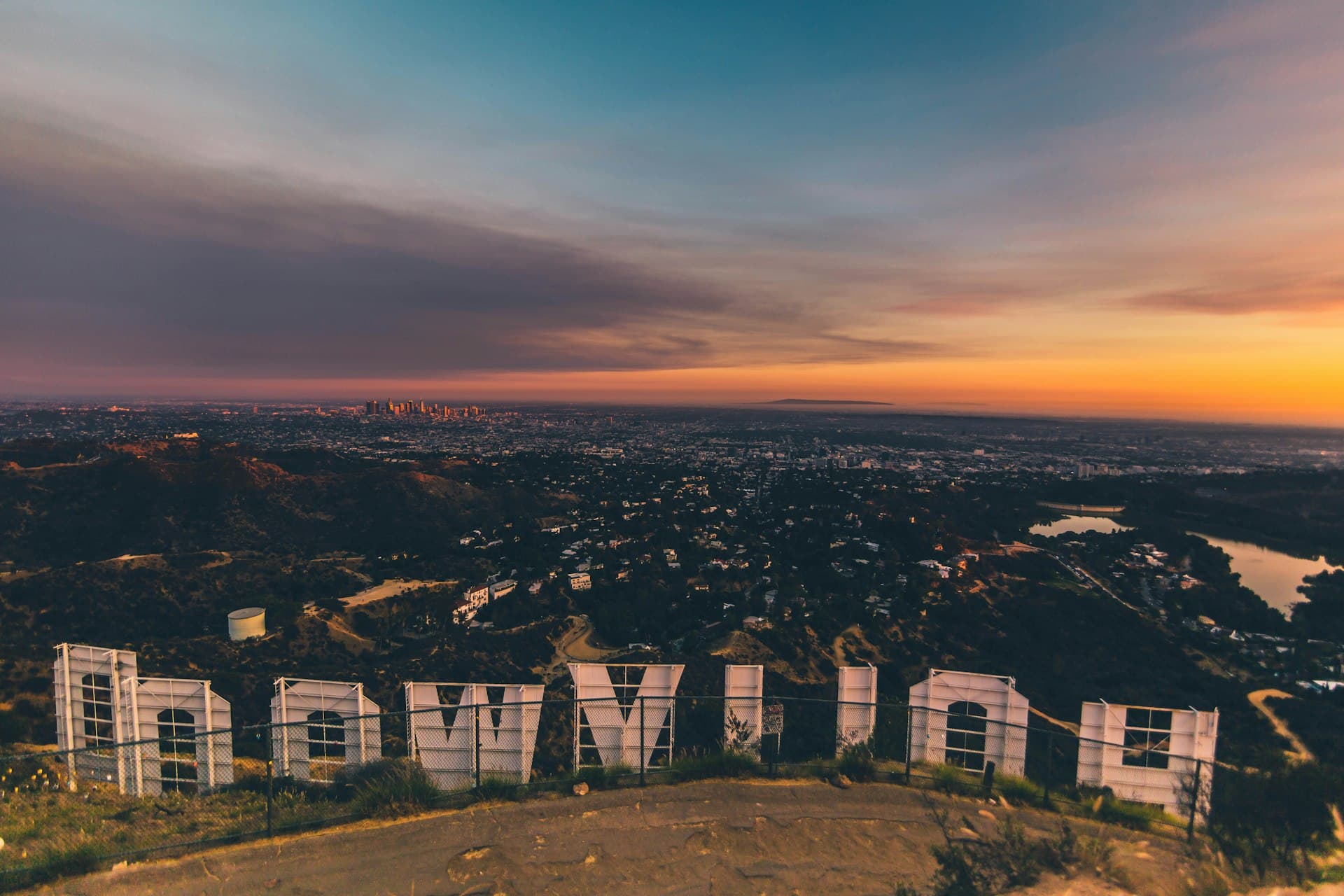
Los Angeles Union Station at night is a cathedral of transit — Art Deco arches, terra-cotta tiles, leather chairs in the old ticket hall, all of it glowing amber under pendant lamps. Built in 1939, it was the last of the great American railway terminals, and stepping inside feels like entering a film set someone forgot to strike. You board at 10 PM. The platform is cool and quiet, the stainless-steel Superliner cars humming with generator power. The conductor calls the train, and then you are moving — slow at first, gliding past the concrete channel of the Los Angeles River, past the warehouses of Lincoln Heights, past the freeways that pulse with white and red light. The city recedes in layers: downtown towers, then the sprawl of the San Gabriel Valley, then darkness. Somewhere past Pomona the desert begins. The train rocks gently through the San Gorgonio Pass, wind farms spinning in the moonlight, and by the time you fall asleep the Pacific coast is already a hundred miles behind you. When you wake, the world will be entirely different — red earth, cactus silhouettes, the first light of Arizona.

Highlights

The Last Great Terminal

Union Station opened in 1939, the final monument of America's railway age. The waiting hall mixes Mission Revival, Art Deco, and Streamline Moderne — a building that couldn't decide which era it belonged to and became timeless for it. Arrive an hour early. Sit in the leather chairs. Watch the light.

Freeway Nocturne

In the first twenty minutes after departure, the train parallels the 5 and 10 freeways. From the upper-level windows, the rivers of headlights and taillights look almost beautiful — Los Angeles as a circuit board, every light a life going somewhere. Then the suburbs thin and the desert takes over.

Grab a window on the left side of the train for the best freeway-lit cityscape views as you leave LA.

Practical

The Sunset Limited departs LA at 10:00 PM, three days a week (Sunday, Tuesday, Friday). Arrive by 9:15 PM. There is no dedicated sleeper lounge at LA Union Station, but the waiting area is beautiful and worth the early arrival.

The first night is entirely in the dark through the desert. Don't fight it — settle into your roomette, let the rocking put you to sleep. The scenery begins at dawn in Arizona.
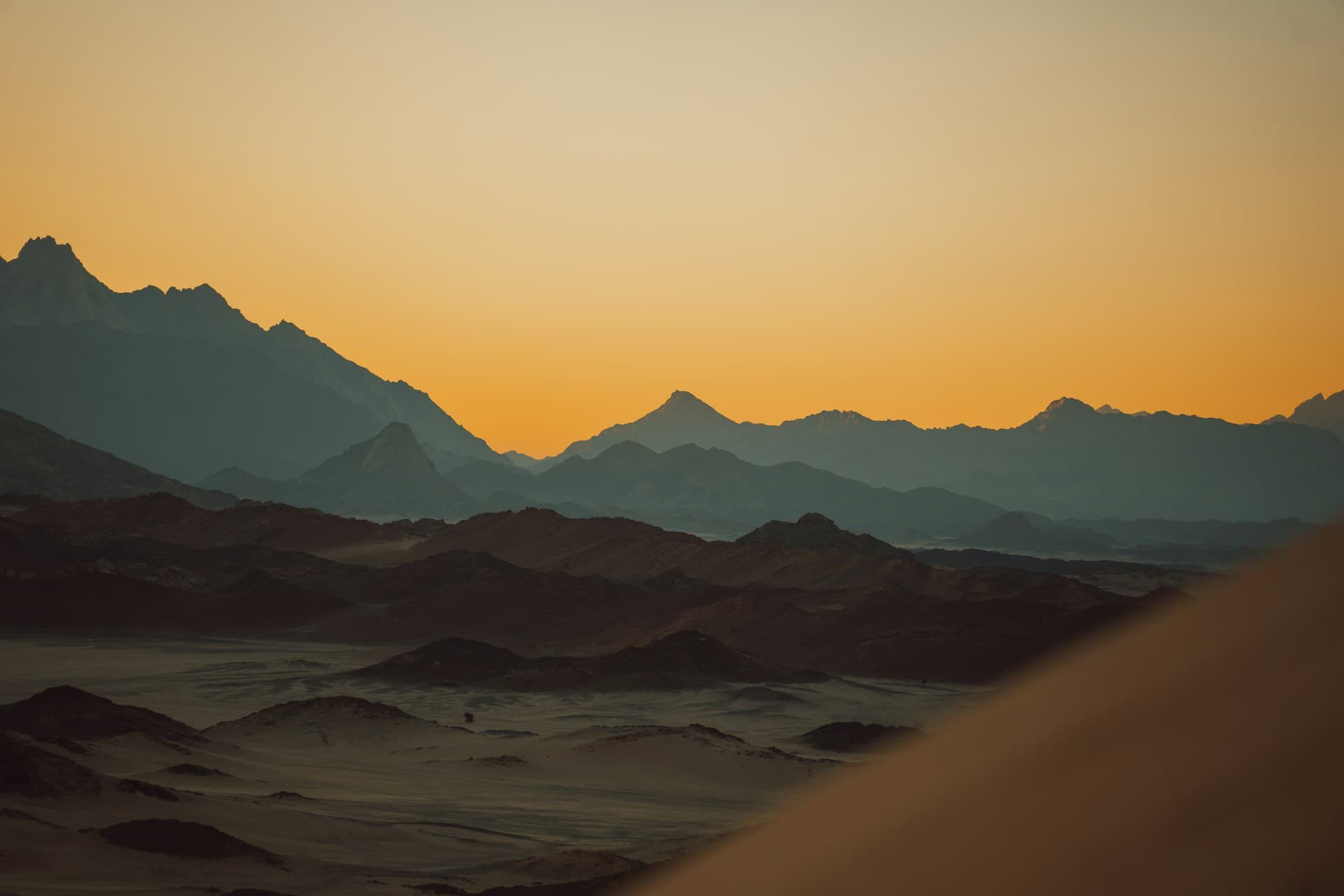
02
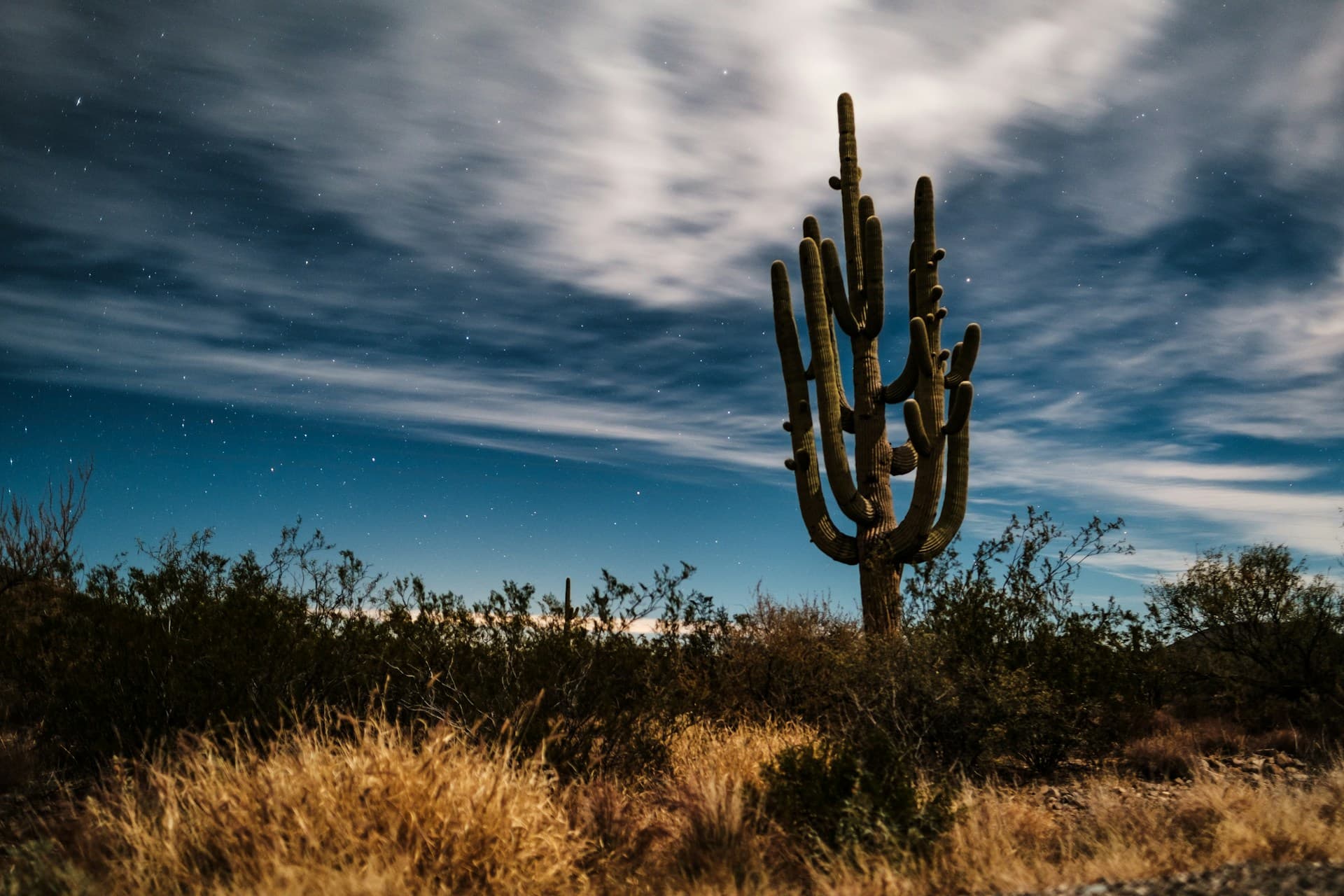
Saguaro cacti silhouetted against a pink Sonoran Desert dawn

Saguaro Country · Mile 300

Tucson & the Sonoran Desert

You wake to a world that shouldn't exist. Outside the window, the Sonoran Desert is not the barren wasteland of imagination but a forest — a forest of saguaro cacti standing forty feet tall, arms raised like figures in surrender, shadows long in the early morning light. The train has been crossing Arizona through the night, and now it slows into Tucson as the sun clears the Rincon Mountains to the east. The air that hits you on the platform is warm and dry and smells faintly of creosote bush, that unmistakable desert-rain scent that the Sonoran carries even on clear mornings. Tucson sits in a valley ringed by five mountain ranges, and from the station you can see the Santa Catalinas to the north, pink and violet in the dawn. This is the only place on Earth where the saguaro cactus grows naturally — the Sonoran Desert straddles the US-Mexico border and supports more species than any other North American desert. The Arizona-Sonora Desert Museum, fifteen miles west, is part zoo, part botanical garden, part geological exhibit — and arguably the finest regional museum in the country. But even from the train platform, standing in the forty-minute layover with a coffee from the station, you can feel it: this landscape is ancient and alive, and it is watching you as much as you are watching it.

Highlights

Arizona-Sonora Desert Museum

Half zoo, half botanical garden, entirely extraordinary. Mountain lions, hummingbird aviaries, a walk-through cave, and docents who can name every cactus species on sight. If you break your journey in Tucson, this is the single must-do.

Saguaro National Park at Dawn

The west district of Saguaro NP is a twenty-minute drive from the station. In the early morning, the cacti cast shadows that stretch fifty feet across the desert floor. It is utterly silent except for the cactus wrens.

The Bajada Loop Drive in the west district is an unpaved scenic loop perfect for a quick sunrise visit.

Gates Pass Sunset

If you break the trip in Tucson for a day, drive to Gates Pass at sunset. The Sonoran Desert drops away to the west in layers of purple and gold. Saguaros stand in silhouette against the dying light. It is one of the great American sunsets.

Gates Pass is 15 minutes west of downtown Tucson. Arrive 30 minutes before sunset for parking — it's popular.

Practical

Tucson has a 40-minute stop — the longest in Arizona. Step off the train, feel the desert air, and stretch your legs on the platform. The station is modest but the mountain views are immediate.

If you want to explore Tucson properly, break your journey here and catch the next Sunset Limited (3 days later). The Desert Museum alone is worth it.

Sit on the left (north) side of the train between Maricopa and Tucson for views of the Picacho Peak — the site of the westernmost Civil War battle.

The dining car serves breakfast starting around 6:30 AM. Time it so you're eating as the saguaros appear — breakfast with a view of the Sonoran Desert is unforgettable.

03
El Paso skyline with the Franklin Mountains and Ciudad Juárez visible across the Rio Grande

US-Mexico Border · Mile 700

El Paso & the Border

The train crosses into New Mexico after Benson, threading through the Chihuahuan Desert — a landscape more austere than the Sonoran, dry grasslands and distant mesas under an enormous sky. By early afternoon you are descending toward the Rio Grande, and then El Paso appears: a city draped across the Franklin Mountains, with its twin — Ciudad Juárez — spread across the river in Mexico. From the train you can see both countries simultaneously, the border wall cutting a thin line between two cities that share everything except a government. El Paso is the largest bilingual, binational metropolitan area in the Western Hemisphere. The culture here is neither fully American nor fully Mexican but something third, something that has been blending for four hundred years since the Spanish crossed through in 1598. The station sits downtown, and during the thirty-minute stop you can walk to the edge of the plaza and look south across the concrete channel of the Rio Grande to Juárez. The Franklin Mountains rise behind the city — the largest urban park in the country, a wall of desert rock that glows copper in the afternoon sun. This is the edge of something. The train will take you deeper into Texas tonight, through Big Bend country in the dark, and by morning you will be in an entirely different world.

Highlights

Scenic Drive Overlook

A winding road up the Franklin Mountains leads to a panoramic overlook where you can see El Paso, Juárez, the Rio Grande, and three states — Texas, New Mexico, and Chihuahua. At sunset the city lights of two nations flicker on simultaneously.

Best visited at golden hour. The overlook is a 10-minute drive from downtown. Bring a jacket — the mountain top is windy.

Crossing to Juárez

You can walk across the Paso del Norte International Bridge into Mexico in fifteen minutes. The Juárez cathedral, the Mercado, the street food — a different country on foot. Bring your passport and return before the train departs.

The Burrito Lady of El Paso

Near the station, hole-in-the-wall taquerías serve burritos that are nothing like what the rest of America calls a burrito — thin flour tortillas, slow-cooked meat, green chile that lights you up. This is border food at its source.

Ask locals for their favorite spot — everyone has one. L&J Cafe on East Missouri has been serving since 1927.

Practical

El Paso has a 30-minute stop. You won't have time to explore far, but the downtown area around the station is walkable and distinctly binational in character.

If you want to visit Juárez or the Franklin Mountains, consider breaking your trip here. El Paso is underrated and worth a full day.

After El Paso, the train enters the most remote stretch of the route — West Texas at night. Big Bend country passes in darkness. Set an alarm for dawn to catch the Hill Country approaching San Antonio.

04
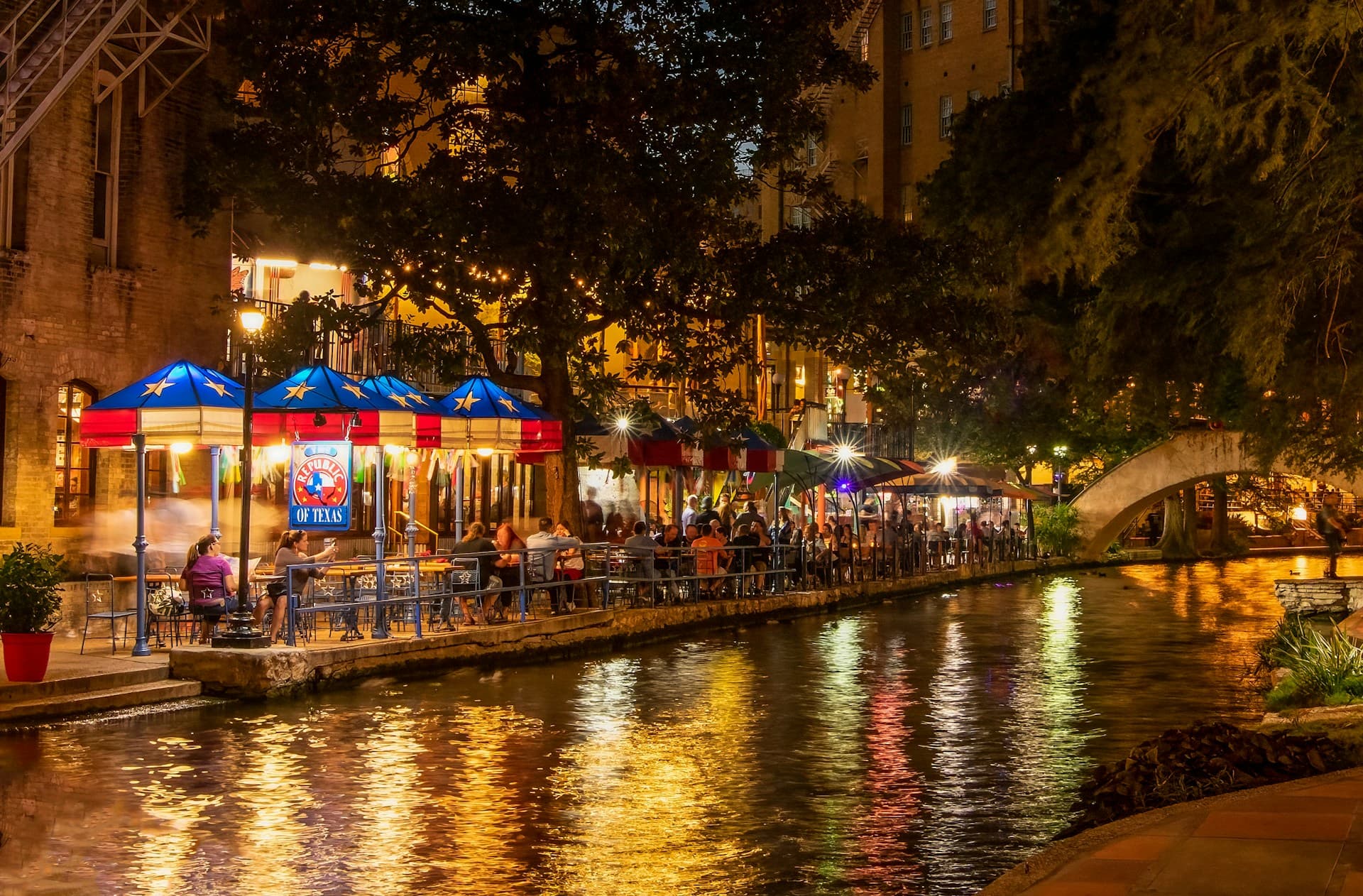
San Antonio River Walk at dawn with cypress trees and stone bridges

River Walk & the Alamo · Mile 1,250

San Antonio

You have been crossing West Texas in the dark — six hundred miles of emptiness, the loneliest stretch of railroad in America. Then dawn comes, and the landscape softens. The dry scrub gives way to live oaks and pecan trees, the light turns gold-green, and suddenly the train is threading through the outskirts of a real city. San Antonio arrives at 6:25 AM with the kindness of morning light on limestone. This is the most culturally layered city on the route: Spanish missions from the 1700s, the Alamo's complicated mythology, a river that the city chose to embrace rather than pave over. The River Walk is a world below street level — stone pathways along the San Antonio River, lined with cypress trees, restaurants, and footbridges, all of it softened by shade and the sound of water. In the early morning it is nearly empty, a secret passage through the heart of the city. The Alamo sits a few blocks north, smaller than you expect, humbler — a chapel in a courtyard, not a fortress. But the Spanish missions south of town, a UNESCO World Heritage Site, are the real revelation: San José, Concepción, Espada, four churches built when this was the northern edge of New Spain, still standing, still beautiful, still in use.

Highlights

The Alamo

Smaller than the myth, more moving than you expect. The chapel is a quiet stone room where 189 defenders died in 1836. Skip the gift shop narrative and just stand inside. The walls have held this story for almost two hundred years.

Arrive before 9 AM to avoid crowds. Free admission. The Long Barrack Museum is often overlooked but excellent.

River Walk at Dawn

The River Walk before breakfast is a different place from the tourist bustle of midday. Stone paths, empty café terraces, water birds on the river. Walk from the station south along the river to the Blue Star Arts Complex — twenty minutes of urban poetry.

Spanish Missions

Four 18th-century missions south of downtown form a UNESCO World Heritage Site — the only one in Texas. Mission San José is the crown jewel, with its carved stone Rose Window. These are not ruins; they are active parishes where Mass is still celebrated.

Rent a bike and ride the Mission Trail — a paved path connects all four missions along the river. Allow 3-4 hours.

Practical

San Antonio has a 35-minute stop at 6:25 AM. The River Walk is a 10-minute walk from the station — you can see a stretch of it and return in time, but it's tight. The Alamo is 15 minutes on foot.

To properly see San Antonio, break the journey. The next Sunset Limited comes through in 3 days, or you can take the daily Texas Eagle to continue east.

Breakfast tacos are a religion in San Antonio. If you break the journey, find a local spot serving barbacoa and Big Red soda — the unofficial city breakfast.

05
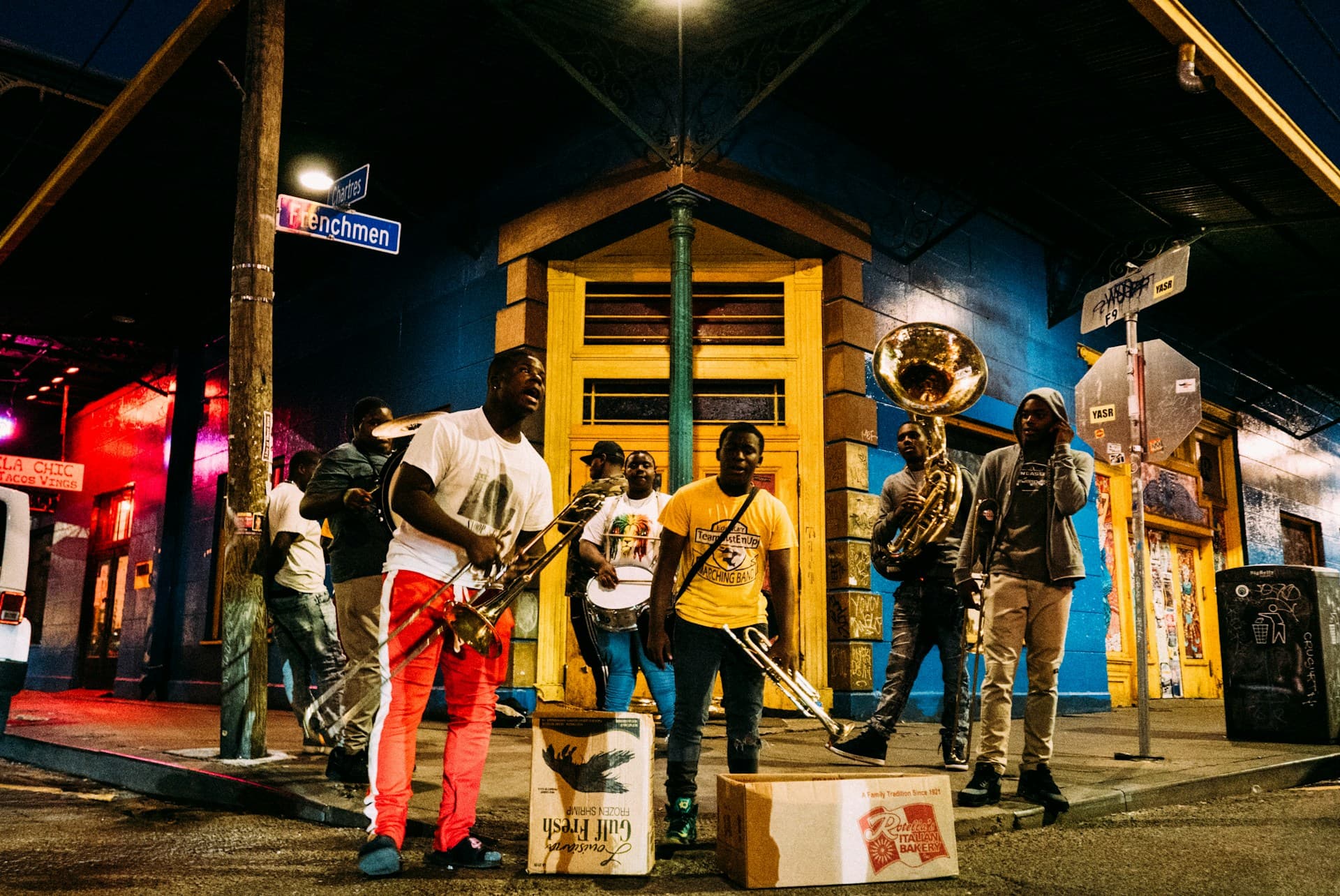
French Quarter street at night with jazz light spilling from open doorways

Space City to Jazz Capital · Mile 1,600

Houston & New Orleans

crescendo

The train crosses the coastal plain of southeast Texas — flat, green, enormous — and pulls into Houston just after noon. Houston is the fourth-largest city in America and the most ethnically diverse: Nigerian, Vietnamese, Salvadoran, Indian — the food scene alone is a journey within the journey. NASA's Johnson Space Center sits thirty miles south, Mission Control still running, the Saturn V rocket lying on its side in a park like a beached whale from another era. But you are passing through. The train pauses forty minutes, then heads east into a landscape that begins to change in ways you can feel. The air thickens. Cypress trees appear, draped in Spanish moss. The water turns dark and still. You are entering the Atchafalaya Basin — the largest river swamp in the United States, a labyrinth of bayous and tupelo forests that the train crosses on elevated track, the water glinting below like hammered pewter. Lafayette passes, then New Iberia, then the sugar-cane fields of the Teche country. The light goes amber, then gold, then the deep blue of a Louisiana evening. And then, at 9:40 PM on the third night, the train slows into New Orleans Union Passenger Terminal and everything changes. The air is warm and heavy with jasmine. The streetcar clangs past on Loyola Avenue. You are two miles from the French Quarter, three from Frenchmen Street where the jazz clubs don't charge a cover because the music is the point, not the commerce. This is the end of the line — the oldest named train in America delivering you to the oldest culture in America. Walk to Café du Monde for beignets and chicory coffee at midnight. Stand on the Moon Walk above the Mississippi and watch the river barges slide past in the dark. You have crossed a continent's worth of landscape in forty-six hours, and now you are somewhere that feels like nowhere else. The Sunset Limited has done what it was built to do: it has changed the country underneath you, mile by mile, until you arrived somewhere you couldn't have reached any other way.

Highlights

Space Center Houston

NASA's visitor center at Johnson Space Center — the real Mission Control, the Saturn V rocket, astronaut training simulators. If you break your trip in Houston, this is the essential stop. The tram tour to the restricted areas is extraordinary.

Book the Level 9 Tour for behind-the-scenes access to Mission Control and astronaut training facilities. Reserve weeks in advance.

Bayou Crossing

Between Beaumont and Lafayette, the train crosses the Atchafalaya Basin on elevated track. Below you: the largest river swamp in America, dark water, cypress knees, egrets lifting from the shallows. It is primordial and astonishing — a landscape that predates human presence and looks it.

This stretch is in the late afternoon. Sit on either side — the swamp surrounds the train on both sides for miles.

French Quarter Arrival

New Orleans Union Passenger Terminal is a modern building with none of LA Union Station's grandeur, but it doesn't matter. You step out at 9:40 PM into warm night air that smells like jasmine and river. The streetcar is right outside. The French Quarter is twenty minutes on foot through the Warehouse District.

Frenchmen Street Jazz

Forget Bourbon Street — that's for tourists. Frenchmen Street is where New Orleans musicians actually play. No cover charge. Walk from club to club: brass bands, Dixieland, bebop, funk — every doorway spilling different music onto the sidewalk. This is the real ending to the Sunset Limited.

Spotted Cat Music Club and d.b.a. are the two essential stops. Arrive after 10 PM when the second sets start.

Practical

Houston has a 40-minute stop at midday. The station is not near the main attractions, but the food trucks near Midtown are a short ride away if you're quick.

The Atchafalaya Basin crossing (roughly 3:00-5:00 PM) is the most scenic stretch of the final day. Don't nap through it.

Arriving in New Orleans at 9:40 PM is perfect — the city comes alive at night. Head straight to Frenchmen Street or Café du Monde. Sleep when you're dead.

Book a hotel in the Marigny or Bywater neighborhoods for the most authentic New Orleans experience. They're walkable to Frenchmen Street and far from the Bourbon Street circus.

Timetable
DayTimeStation
Day 2 · Plains & Mountains
Day 3 · Cascades to Seattle

Schedule based on Amtrak Empire Builder Train 7 (westbound). Actual times may vary. All times are local.

Resources & Info

⚠️ On-Time Performance

Recent: 67.2% (Jan 2026)

12-month average: 62.8% (12-month)

Avg delay when late: 71–99 min when late

Build buffer days into your schedule. The train runs only once daily — if you miss a connection, you wait 24 hours.